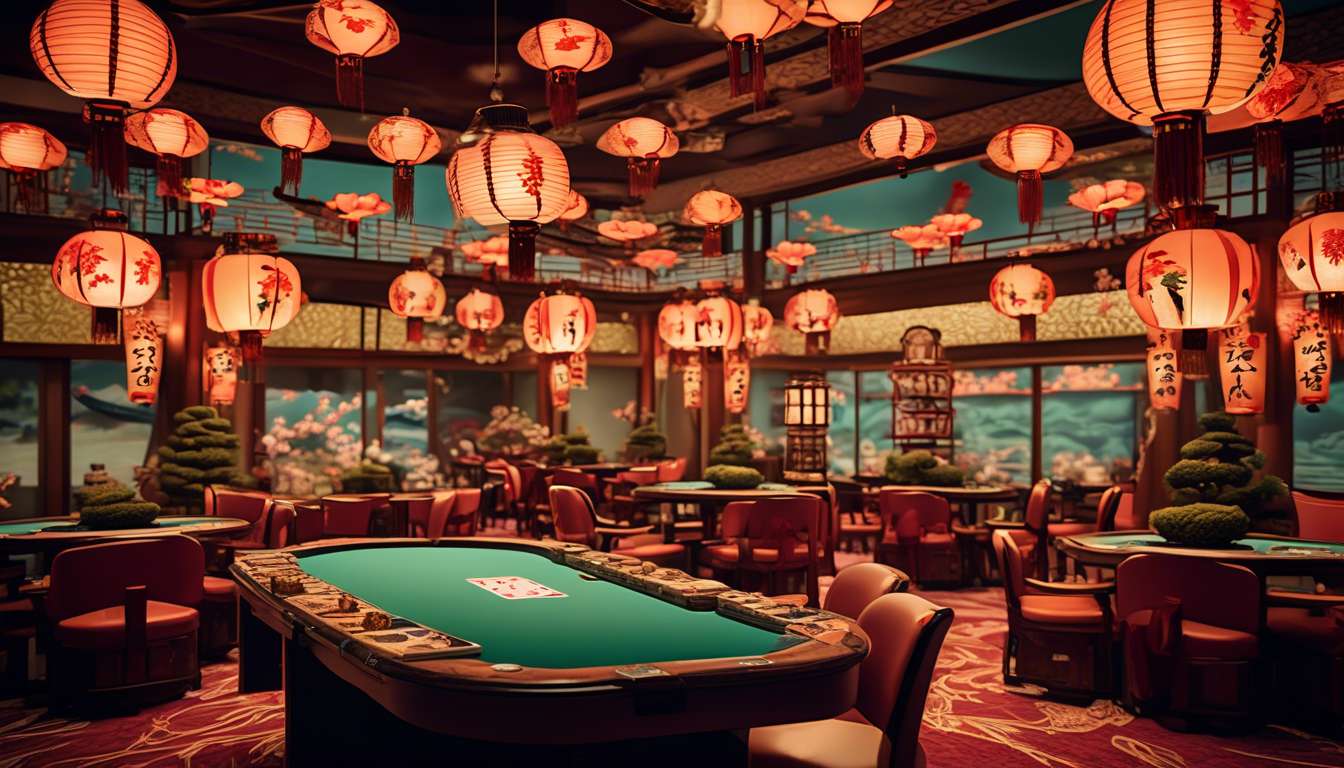
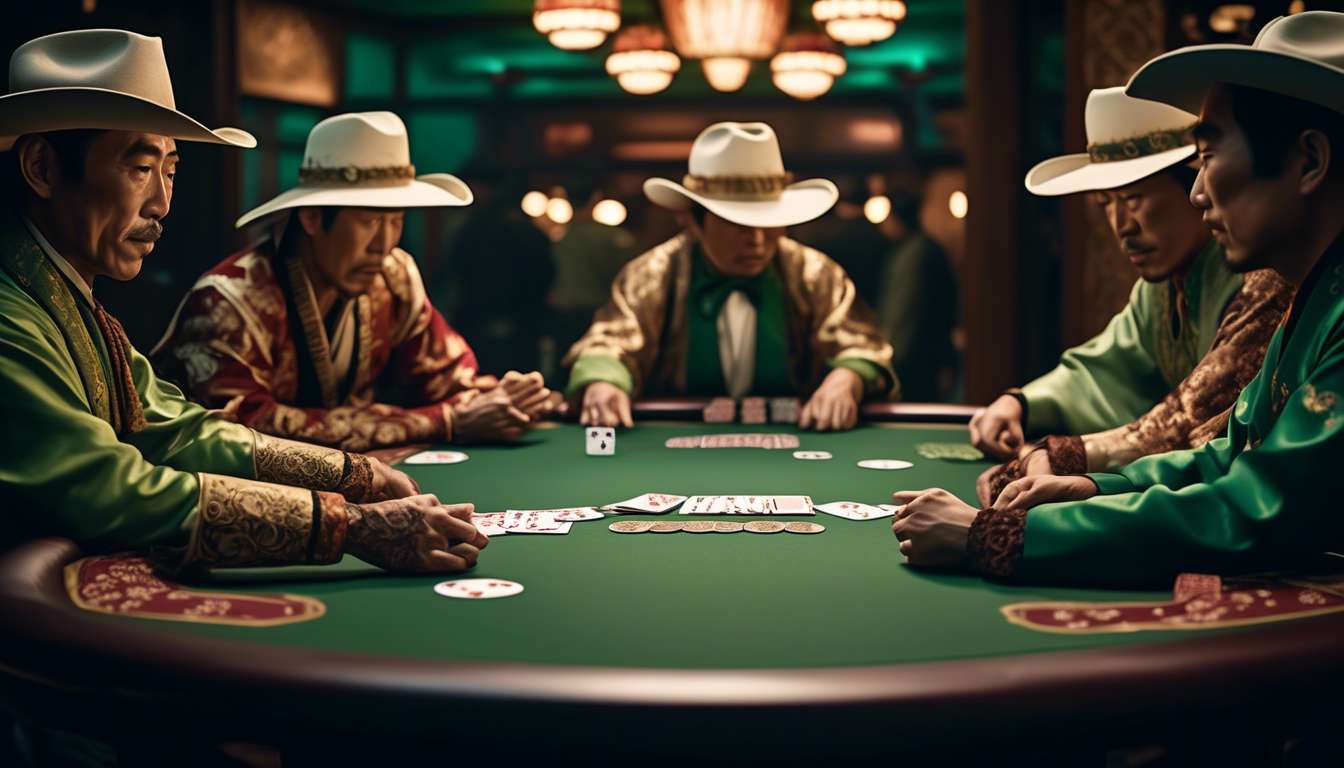
Poker Enthusiasts, we find ourselves at a fascinating crossroads where two distinct worlds of poker converge: Japanese and Western poker.
As we delve into this ultimate comparison, we see an opportunity not only to explore the nuances of each style but also to appreciate the cultural influences that shape these games.
Together, we will navigate through the:
-
Strategies:
- Japanese poker often emphasizes subtlety and psychological tactics.
- Western poker is known for its aggressive play and high-stakes drama.
-
Rules:
- Japanese poker may incorporate unique twists and cultural flair.
- Western poker generally follows more standardized rules across various formats like Texas Hold’em and Omaha.
-
Atmospheres:
- Japanese poker settings can reflect cultural traditions and a more formal ambiance.
- Western poker environments are often characterized by their intense and competitive nature.
In doing so, we aim to uncover the rich tapestry of skills, traditions, and innovations that both styles bring to the table.
By examining these differences and similarities, we hope to offer insights that enrich our understanding and perhaps even enhance our own gameplay.
Let’s embark on this journey together, as we explore the diverse world of poker from a global perspective.
Cultural Influences
Cultural influences significantly shape how Japanese and Western societies engage with and perceive the game of poker.
In Japan, poker is deeply intertwined with respect and honor, guiding player etiquette. We often find ourselves drawn to the subtlety and precision of the game, where respect for opponents is paramount. This respect affects how we approach bluffing techniques, as we value sincerity and subtlety over bold deception.
In contrast, Western players often embrace a more individualistic style. Here, bluffing techniques can be bolder, reflecting a culture that appreciates risk-taking and assertiveness. The Western approach often highlights personal flair, with player etiquette allowing for more expressive interactions at the table.
By understanding these cultural influences, we can appreciate the diverse ways poker is played and perceived.
We find belonging in how our cultural backgrounds shape our strategies and interactions, creating a rich tapestry of poker experiences that unite us across borders.
Approach to Bluffing
Our approach to bluffing in poker reflects the cultural values that influence our gameplay strategies.
In Western poker, bluffing is often bold and assertive, aligning with a cultural emphasis on individualism and risk-taking.
- Players might use aggressive betting as a bluffing technique to unsettle opponents.
- This showcases their confidence and strategic prowess.
On the other hand, Japanese poker players tend to adopt a more subtle approach to bluffing, driven by cultural influences that prioritize harmony and respect.
- Carefully calculated, nuanced moves are often observed, maintaining player etiquette.
- The game remains respectful and honorable, with bluffing focused on strategic misdirection rather than dominating the table.
By understanding these differing bluffing techniques, we can appreciate how cultural backgrounds shape each player’s style.
This fosters a sense of belonging when we recognize these diverse approaches, allowing us to connect through shared respect for the game’s rich, varied strategies.
Tournament Dynamics
In tournament dynamics, we notice how Japanese and Western poker players adapt their strategies to their cultural norms and competitive environments. Cultural influences shape how each player approaches the game.
In Japan, poker players often rely on subtlety and restraint, reflecting a cultural emphasis on harmony. Their bluffing techniques are typically conservative, aiming to avoid confrontations. This results in a style that values patience and long-term strategic planning.
Conversely, Western players tend to embrace more aggressive bluffing techniques. The Western poker scene often celebrates bold moves and risk-taking, which translates into a dynamic and sometimes unpredictable tournament atmosphere. This approach is heavily influenced by a culture that values individualism and assertiveness.
While both styles offer unique advantages, the tournament dynamics are enriched by these cultural contrasts. By observing and learning from each other, we can enhance our own game, blending the best of both worlds. Together, we create a vibrant and diverse poker community where everyone’s strategies find a place.
Player Etiquette
When we observe poker games, the differences in player etiquette between Japanese and Western cultures become evident.
In Japan, cultural influences emphasize respect and politeness, creating an environment where players maintain a calm demeanor. We notice that players often avoid exaggerated gestures or loud expressions, focusing instead on subtle, respectful interactions. This approach extends to bluffing techniques, where restraint and composure are key, adding a unique layer of complexity to the game.
In contrast, Western poker culture thrives on boldness and psychological tactics. Here, player etiquette allows for more expressive behavior at the table. We see players using:
- Vocal bluffs
- Dramatic gestures
- Calculated intimidation
These tactics are used to gain an edge. This dynamic creates a thrilling atmosphere, where reading an opponent’s tells becomes part of the excitement.
Both cultures bring their distinct flair to poker through their player etiquette. Understanding these nuances helps us appreciate the rich diversity and strategies that enhance our experience at the table, fostering a sense of global poker community.
Popular Variants
When exploring popular poker variants, we find that both Japanese and Western cultures have adapted the game in unique ways to suit their distinct traditions and preferences.
In Japan, Hanafuda and its variant, Koi-Koi, show strong cultural influences with their use of beautifully illustrated cards and strategic bluffing techniques. These games emphasize harmony and respect, reflecting traditional player etiquette. Here, players often approach the game with a calm demeanor and a focus on subtlety in their strategies.
In contrast, Western poker variants like Texas Hold’em and Omaha have gained immense popularity due to their dynamic gameplay and the excitement of high stakes. Bluffing techniques in these games are bold and daring, often involving intricate psychological plays.
Western player etiquette, while respectful, encourages assertiveness and a competitive spirit that brings out camaraderie among players.
Both regions demonstrate how cultural influences shape the way poker is played and appreciated, allowing us to experience a sense of belonging through these shared yet diverse traditions.
Training Methods
To master poker strategies, we often rely on a mix of traditional study methods and modern technological tools. In both Japanese and Western poker communities, our training is deeply influenced by cultural nuances.
Japanese Approach:
- Japanese players emphasize discipline and respect for player etiquette, reflecting broader societal values.
- They often analyze historical games, focusing on subtlety and the art of reading opponents to refine their bluffing techniques.
Western Approach:
- In the West, we embrace a more aggressive approach, using online platforms to simulate countless scenarios.
- This helps develop a diverse range of bluffing techniques, often relying on psychological tactics.
- Player etiquette is flexible, allowing for more dynamic interactions that mirror Western cultural influences.
Blending Cultures:
Together, these methods create a rich tapestry of learning.
As players, we thrive in environments where we can exchange ideas and strategies, blending the best of both worlds. This sense of community strengthens our skills and deepens our appreciation for the game.
Notable Players
Among the many skilled poker players, some have become legends in both Japanese and Western circles, shaping the game’s evolution with their unique styles and strategies.
In Japan, players like Naoya Kihara have gained recognition not just for their skills but for their ability to infuse cultural influences into their gameplay. Kihara’s respect for player etiquette, rooted in Japanese traditions, has earned him admiration on international tables, emphasizing a harmonious approach to competition.
Western poker, on the other hand, boasts icons like Phil Ivey. His aggressive bluffing techniques redefine the psychological warfare of poker. Ivey’s daring style contrasts with more conservative Japanese strategies, highlighting cultural differences in risk-taking and deception.
Despite these differences, both cultures value the mind game’s finesse, creating a diverse yet interconnected community.
As we explore these notable players, we appreciate how they’ve not only mastered the game but also enriched the poker world by blending:
- Cultural influences
- Bluffing techniques
- Player etiquette
This fusion contributes to a shared passion for poker that transcends cultural boundaries.
Future Trends
As we look to the future of poker, emerging technologies like artificial intelligence and virtual reality are set to revolutionize how we play and experience the game.
These advancements will not only enhance our gameplay but also bring players from diverse cultural backgrounds together, creating a more interconnected global poker community.
Artificial Intelligence (AI) in Poker:
- AI could refine our bluffing techniques by analyzing opponents’ strategies in real-time.
Virtual Reality (VR) in Poker:
- VR might offer a more immersive experience, allowing us to feel like we’re sitting across the table from players worldwide.
Cultural influences will play a significant role in shaping these technologies, blending Japanese precision with Western boldness in poker.
We’ll find ourselves:
- Learning new player etiquette norms.
- Respecting the unique traditions each culture brings to the table.
As we embrace these changes, our community will grow stronger, united by a shared passion for poker and an appreciation of its rich diversity.
Together, we’ll navigate this exciting evolution, enriching our poker experiences for years to come.
How do the rules of poker differ between Japanese and Western versions?
In poker, the rules can vary between Japanese and Western versions. While both share similar basics, such as hand rankings and betting rounds, there are key differences.
Japanese Poker often incorporates:
- Unique card combinations
- Different betting structures not commonly seen in Western variants
Western Poker generally adheres to more standardized rules and structures familiar to most players.
Understanding these distinctions can add an extra layer of excitement and strategy to the game, making it even more engaging for players looking to expand their poker skills.
What are the historical origins of poker in Japan and the West?
Historical Origins of Poker
Japan:
- Poker was introduced to Japan during the Meiji Restoration.
- This period marked a significant influence of Western culture on Japanese society.
The West:
- Poker has a rich history in the West, tracing back to the early 19th century in America.
Cultural Embrace:
- Both Japan and the West have embraced poker, each adding their unique flair.
- This cultural fusion has led to the diverse versions of poker we see today.
How does the popularity of poker differ between Japan and Western countries?
Poker’s Popularity in Different Regions
In both Japan and Western countries, poker’s popularity varies greatly. While poker is a well-established pastime in Western nations, it struggles to gain widespread appeal in Japan.
Cultural Differences and Preferences
The cultural differences and preferences towards gambling play a significant role in this disparity.
- Western Perspective: In the West, poker is often viewed as a competitive and strategic game.
- Japanese Perspective: In Japan, it may not hold the same level of interest due to cultural norms and traditional forms of entertainment.
Conclusion
In conclusion, when weighing Japanese and Western poker, it’s clear that cultural influences play a significant role in shaping the gameplay and strategies employed.
From bluffing tactics to player etiquette, each region brings a unique perspective to the table.
As the world of poker continues to evolve, exploring the differences and similarities between these two styles can provide valuable insights for players looking to enhance their skills and understanding of the game.